Practice Programmer Virtues
Virtuous laziness optimizes for total future effort, not immediate personal effort. Reduce the system, anticipate the pain, and own the work you leave behind.
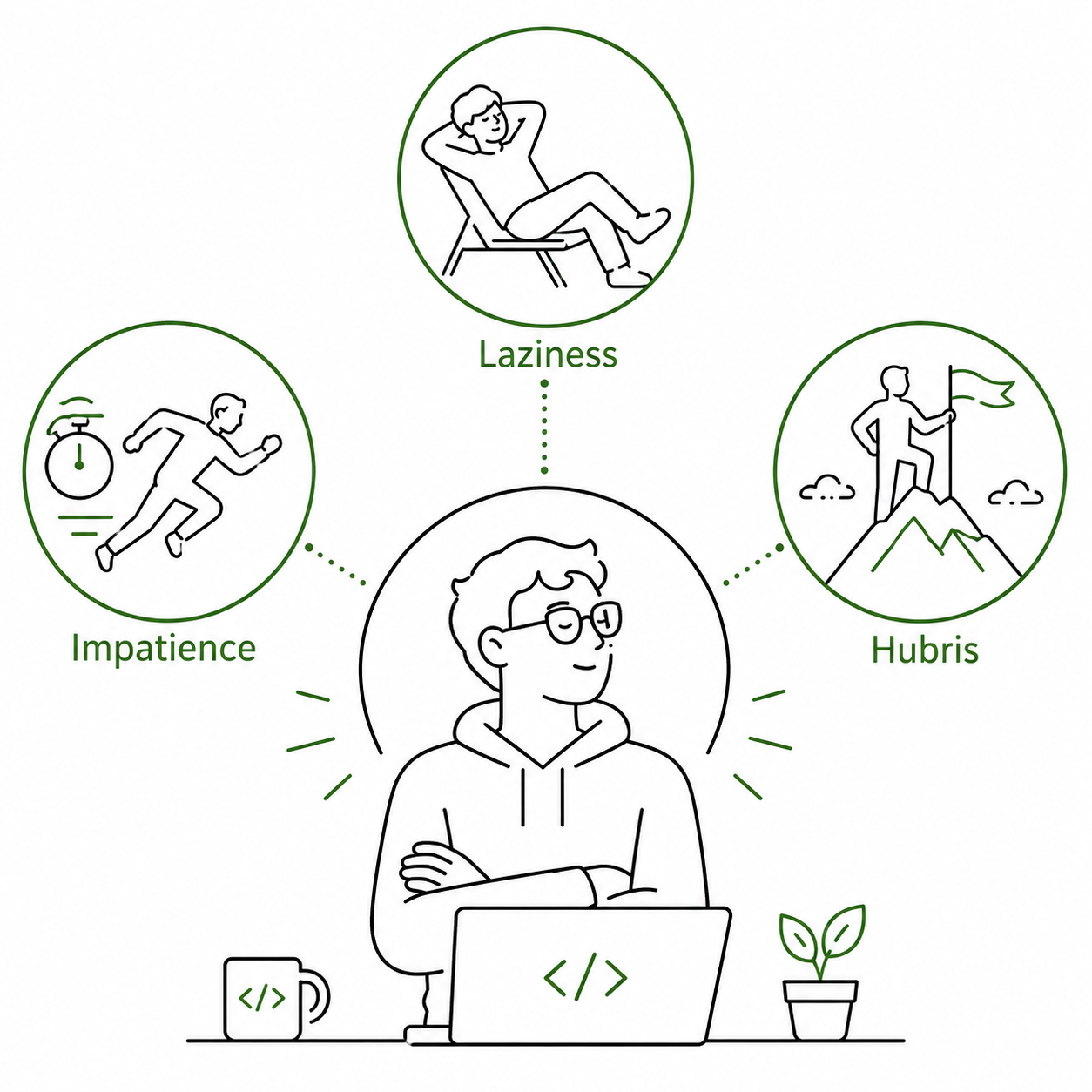
There are three great virtues of a programmer; Laziness, Impatience and Hubris - Larry Wall
- Laziness means reducing the total work a system creates, often by deleting, simplifying, documenting, or automating what should not be repeated.
- Impatience means noticing slow or clumsy systems and improving them before everyone adapts to the pain.
- Hubris means believing the system can be better, and taking responsibility for the design, code, docs, generated output, and maintenance burden you leave behind.
- Be suspicious of output as a metric. More code is often more future work.
- Balance ambition with community virtues: diligence, patience, and humility.
- The goal is not to avoid effort. The goal is to make the system smaller, clearer, and easier to operate.
Do not rebuild the same project setup by hand every time. Capture the pattern in a template, script, or shared stack so future projects start from a clearer path instead of repeating the same decisions.